Artykuły

Streszczenia, opisy i linki do artykułów


2026

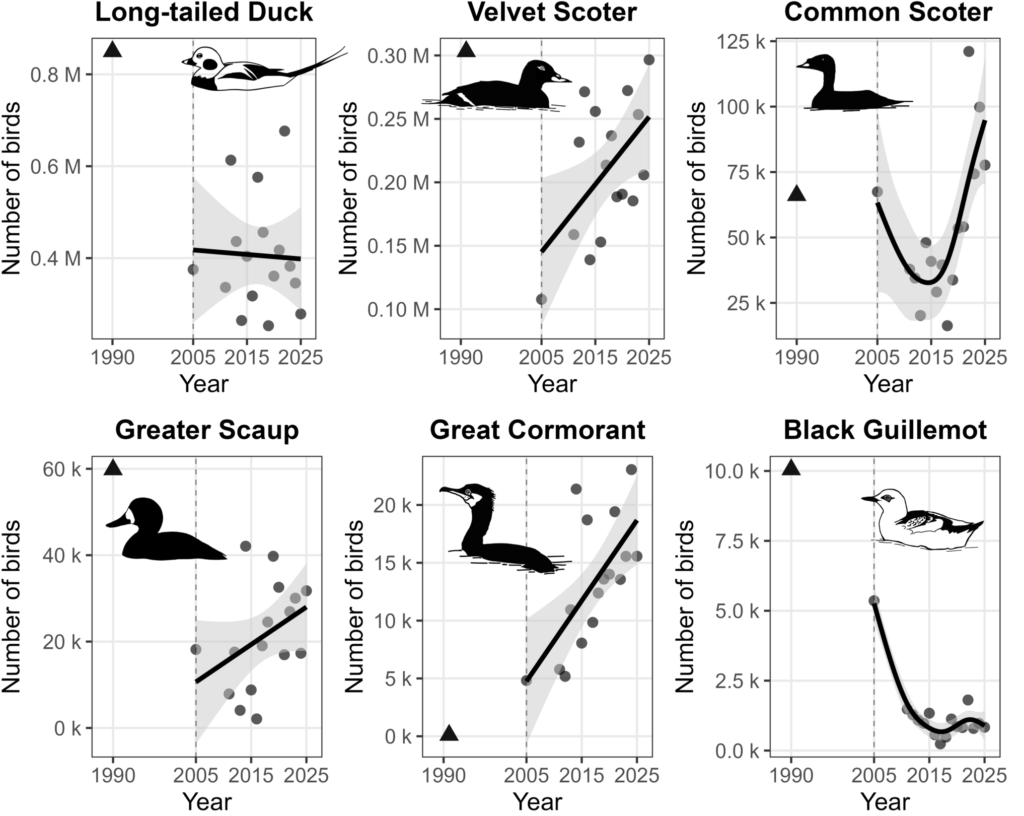
Population shifts in diving seabirds in the southern Baltic: a 35-year analysis


Marchowski, D., Meissner, W., Wardecki, Ł. et al. Population shifts in diving seabirds in the southern Baltic: a 35-year analysis. J Ornithol (2026).

https://doi.org/10.1007/s10336-026-02434-0

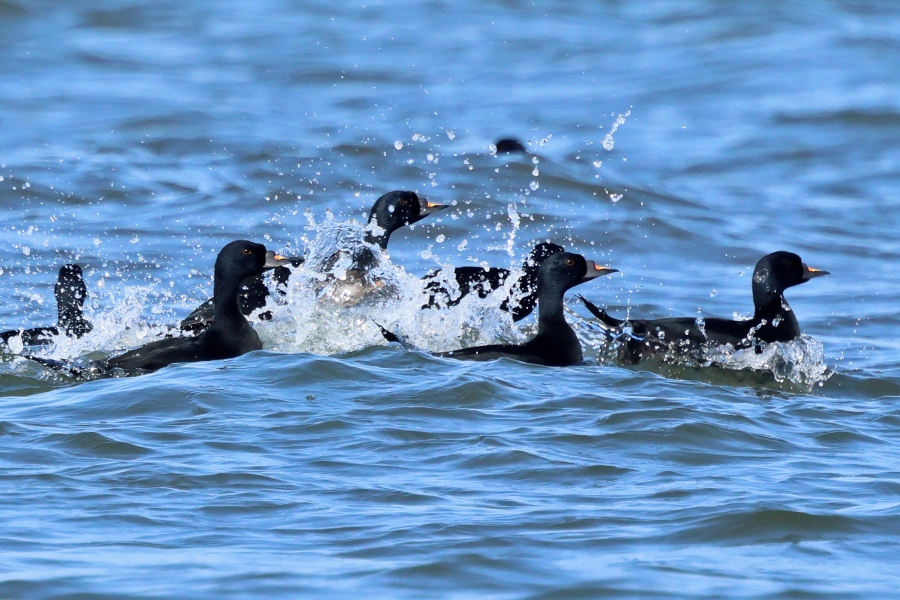
Markaczki (Malenitta nigra), Common Scoter, Photo. Piotr Zientek


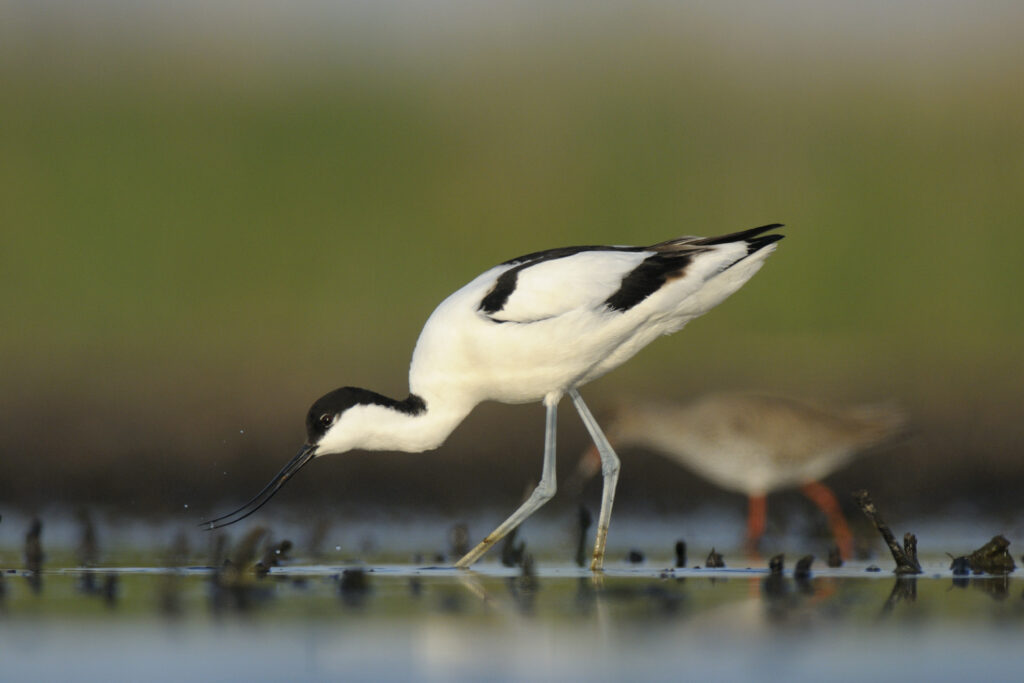
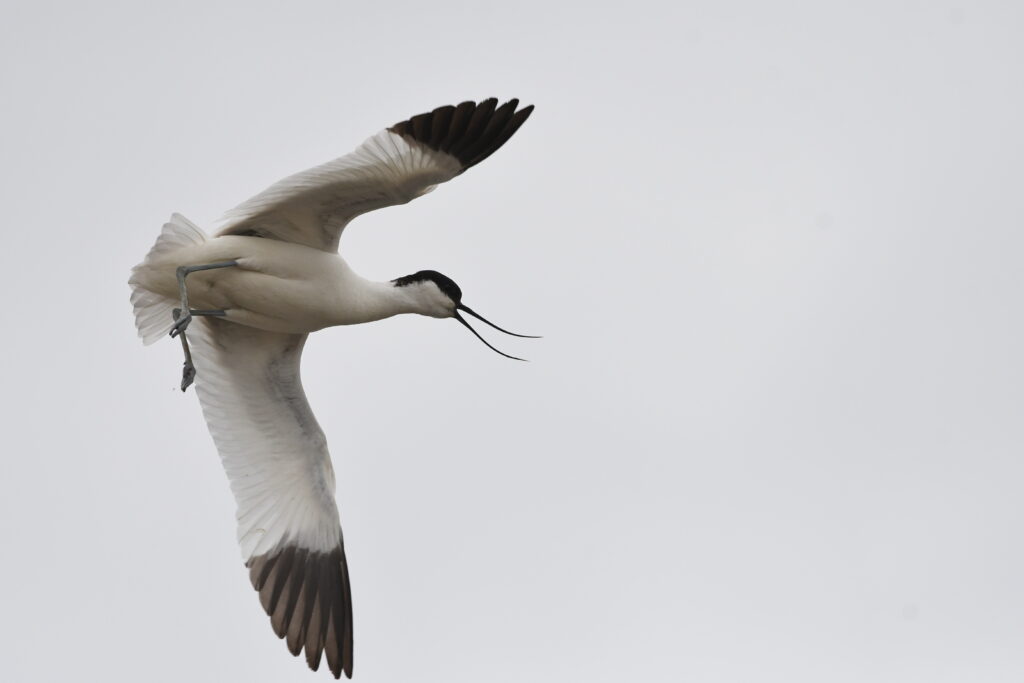
Szablodziób (Recurvirostra avosetta, Pied Avocet), Phot. Miłosz Kowalewski

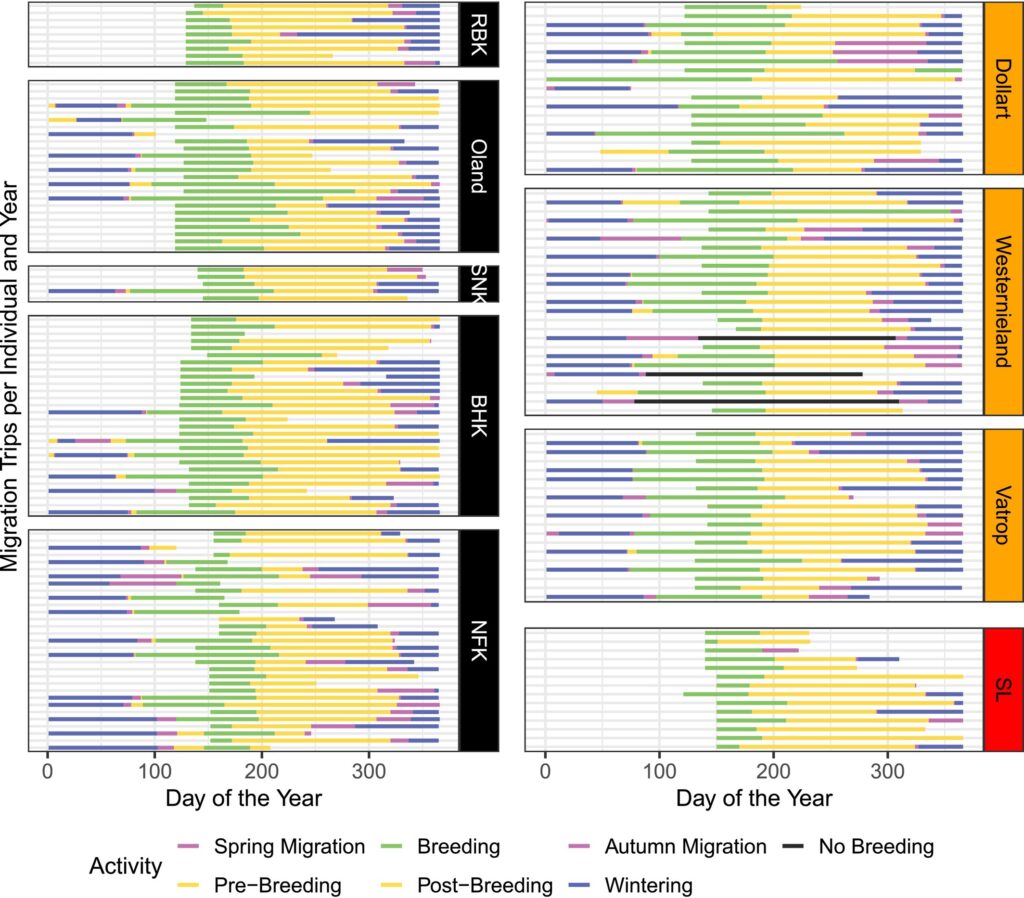
Females Fly Further—Sex-Specific and Seasonal Differences in Migration Patterns of Pied Avocets

Eskildsen, M., S. Garthe, S. Duijns, et al. 2026. “ Females Fly Further—Sex-Specific and Seasonal Differences in Migration Patterns of Pied Avocets.” Ecology and Evolution 16, no. 6: e73798.

https://doi.org/10.1002/ece3.73798.

Figure →

Phenology of the annual cycle per individual and year according to tagging location (black, German breeding colonies; orange, Dutch breeding colonies; red, Polish breeding colony; RBK, Rickelsbüller Koog; SNK, Sönke-Nissen-Koog; BHK, Beltringharder Koog; NFK, Neufelderkoog; SL, Szczecin Lagoon). Bars for each individual start with catching during breeding in the middle of the year; bar in the next line either continues the bar from the individual above (if > 1 year of data recorded) or starts again with breeding of another individual. Spring Migration = time spent on migration between departure from the wintering site and arrival at the Wadden Sea; Pre-Breeding = period between arrival at the Wadden Sea and arrival at the breeding site; Breeding = time spent at the breeding site; Post-Breeding = period between departure from the breeding site and departure from the Wadden Sea; Autumn Migration = time spent on migration between departure from the Wadden Sea and arrival at the wintering site; Wintering = time spent at the wintering site; No Breeding = time spent in the Wadden Sea without a breeding attempt in the given year.

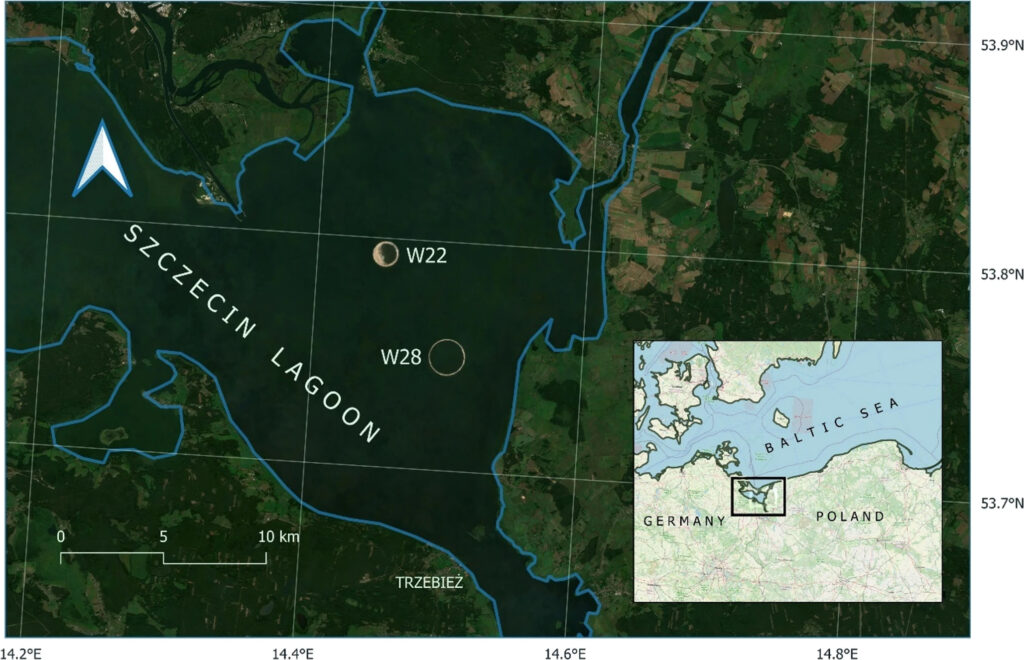
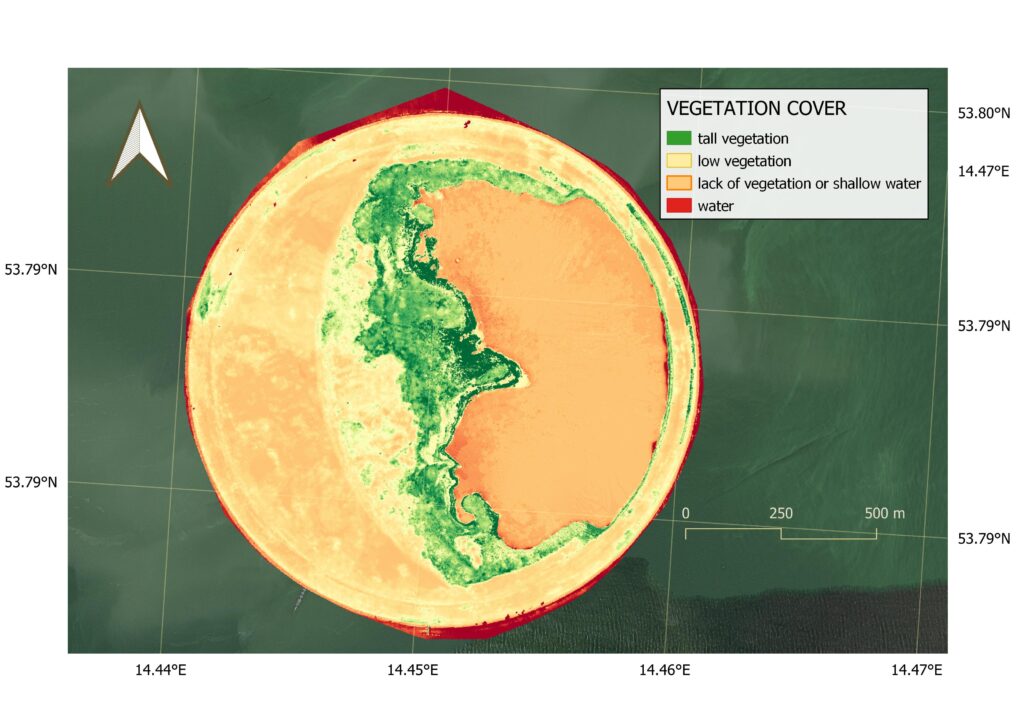
Study area in the Szczecin Lagoon (southern Baltic Sea), showing the two artificial islands W22 and W28. Basemap sources: Sentinel-2 Cloudless © EOX IT Services GmbH; background map © OpenStreetMap contributors

 
Dredged-Sediment Islands as Temporary Ecological Refugia: Rapid Waterbird Colonisation and Fast Habitat Closure in a Baltic Lagoon


Marchowski, D., Kajzer, Z., Sołowiej, M. et al. Dredged-Sediment Islands as Temporary Ecological Refugia: Rapid Waterbird Colonisation and Fast Habitat Closure in a Baltic Lagoon. Estuaries and Coasts 49, 126 (2026).

https://doi.org/10.1007/s12237-026-01737-y

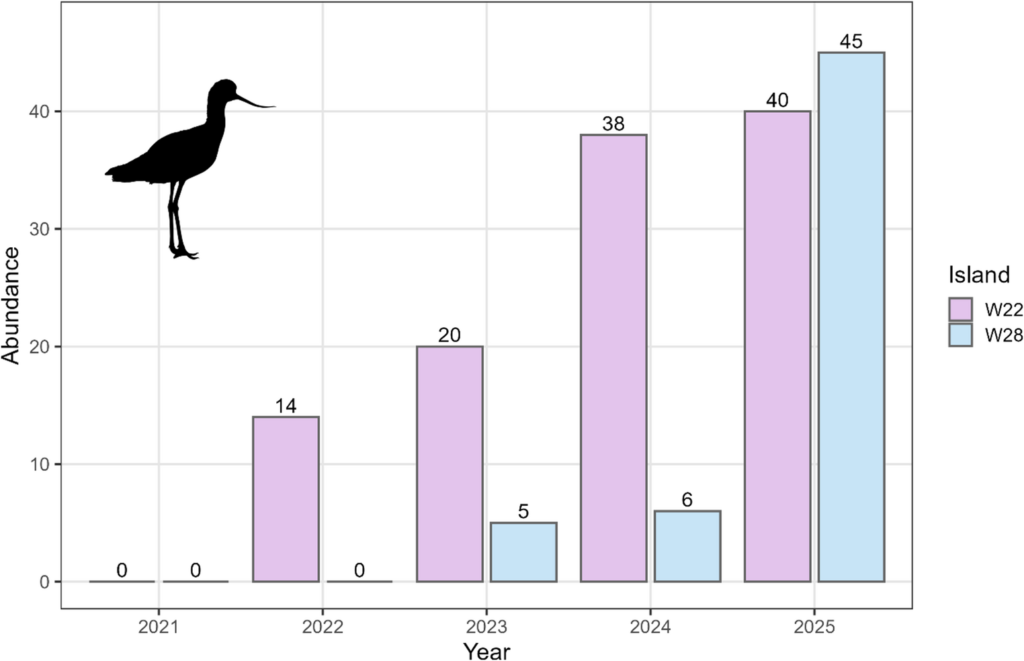
Abundance of Pied Avocets Recurvirostra avosetta (breeding pairs) on islands W22 and W28 in 2021–2025

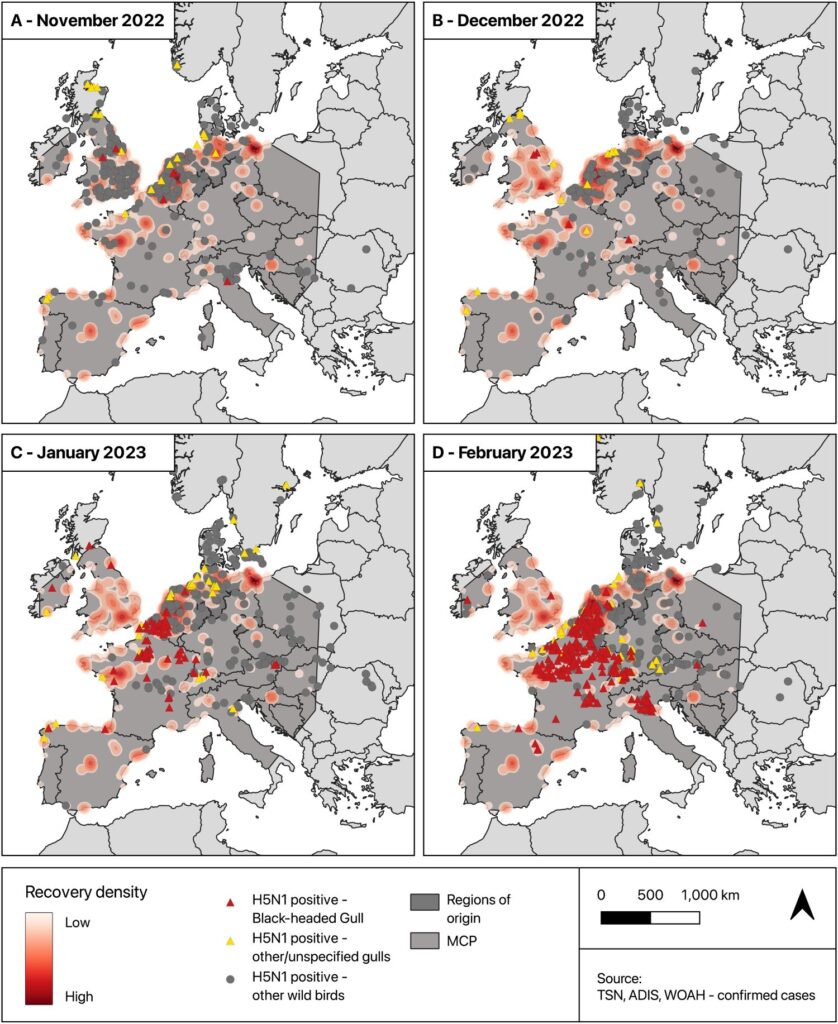
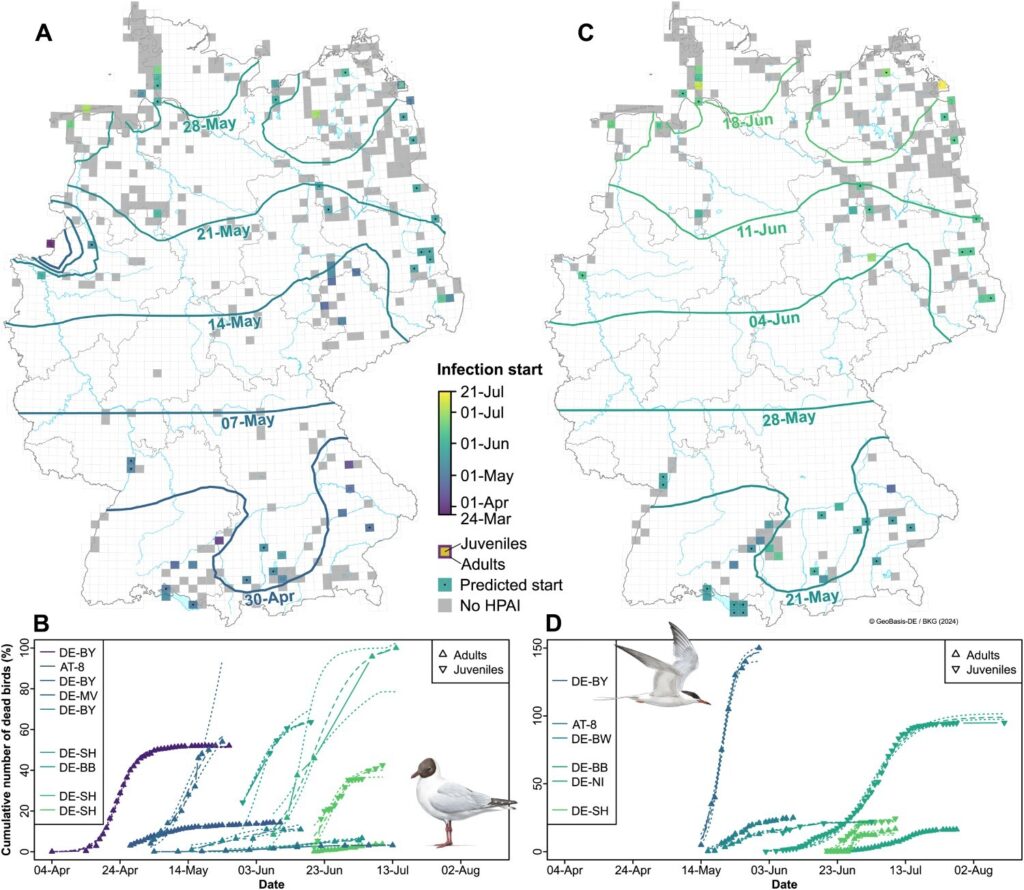
Outbreak dynamics of high pathogenicity avian influenza virus H5N1, clade 2.3.4.4b euBB, in black-headed gulls and common terns in Germany in 2023

Knief U, Ahrens AK, Allendorf V, Behringer CJ, Bertram J, Bouwhuis S, Fiedler W, Globig A, Günther A, Herrmann C, Knauf S, Marchowski D, Piro S, Pohlmann A, Rollins RE, Staubach C, Harder T (2026) Outbreak dynamics of high pathogenicity avian influenza virus H5N1, clade 2.3.4.4b euBB, in black-headed gulls and common terns in Germany in 2023. Avian Pathol 55:487–507.

https://doi.org/10.1080/03079457.2026.2659834

 
Methodological elaboration on data sources, spatial verification and scale in the evaluation of waterbird hunting


Marchowski D (2026) Methodological elaboration on data sources, spatial verification and scale in the evaluation of waterbird hunting. Avian Res 17:100382.


https://doi.org/10.1016/j.avrs.2026.100382

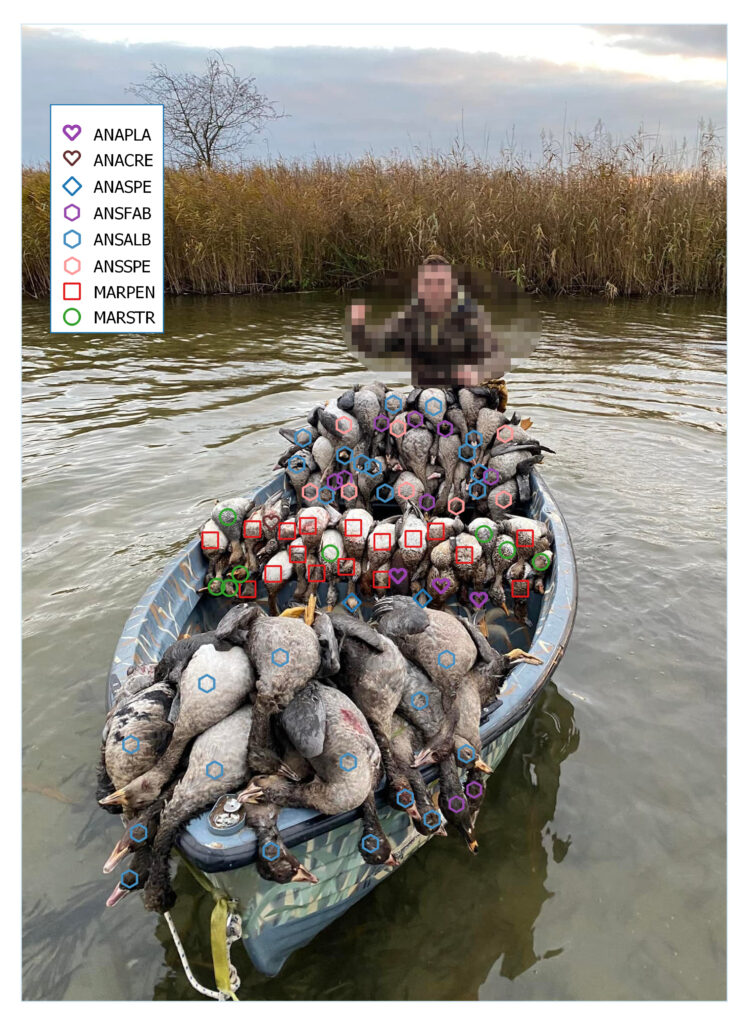
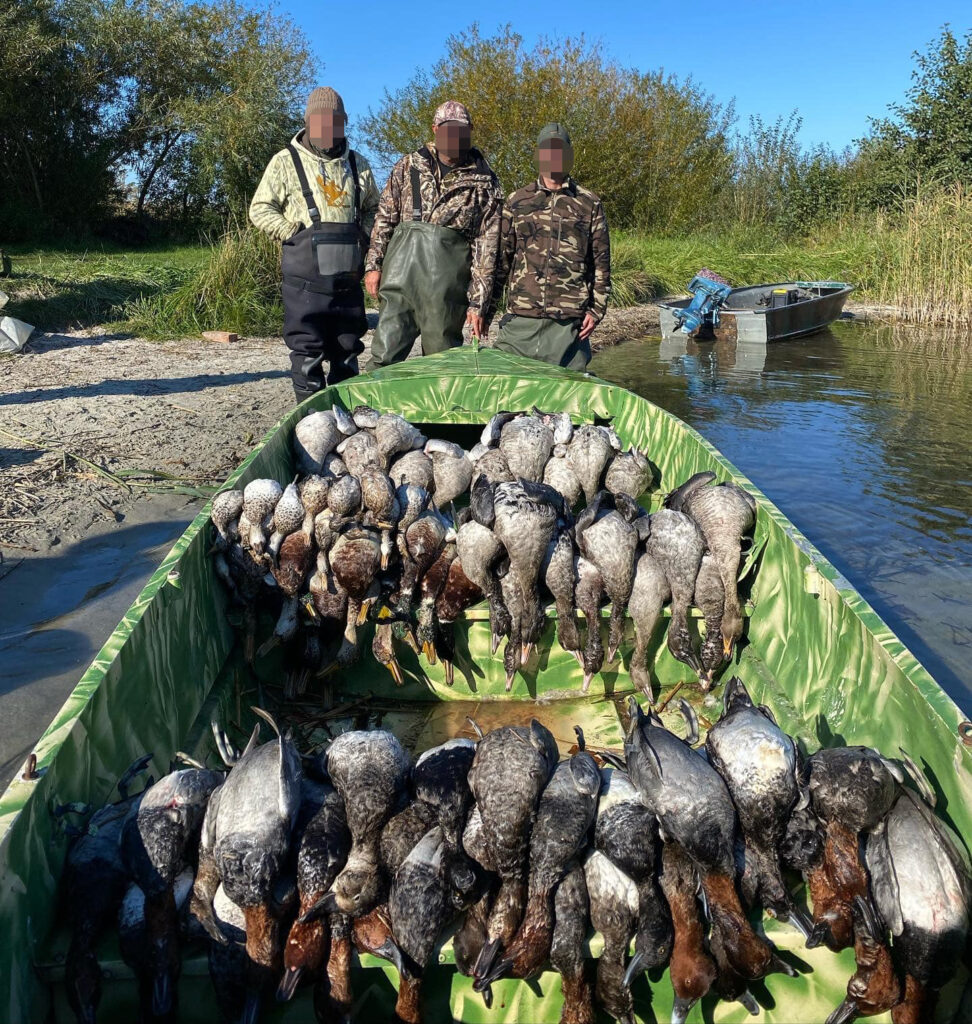
Artykuł stanowi odpowiedź na uwagi krytyczne dotyczące badań nad polowaniami na ptaki wodne w obszarze Natura 2000 Jezioro Miedwie i doprecyzowuje zastosowaną metodykę. Autor opisuje weryfikację zdjęć z publicznych mediów społecznościowych: spośród 91 fotografii do analizy zakwalifikowano 40, dokumentujących 33 zdarzenia łowieckie o potwierdzonej lokalizacji. Na zdjęciach odnotowano 1331 upolowanych ptaków, co jest zbliżone do 1279 osobników zgłoszonych przez koło łowieckie; wyjaśniono również, że 43% oznacza udział gatunków chronionych wśród wszystkich rozpoznanych gatunków, a nie udział osobników. Podkreślono, że wnioski dotyczą lokalnych zdarzeń i nie mogą być przenoszone na krajowe trendy populacyjne ani ogólną skalę odstrzału. Spadek liczebności żurawi na noclegowisku, zbieżny w czasie z nasileniem polowań, uznano za zgodny z hipotezą wypierania ptaków wskutek płoszenia, ale nie za dowód związku przyczynowego.

Acoustic and Visual System to Attract Caspian Tern (Hydroprogne caspia) to Artificial Island in the Szczecin Lagoon, Southern Baltic, Poland

Marchowski D, Kajzer Z, Sołowiej M, Michałowski S, Zientek P, Barcz M, Stańczak P, Jasiński M, Jankowiak Ł (2026) Acoustic and visual system to attract Caspian tern (Hydroprogne caspia) to artificial island in the Szczecin Lagoon, southern Baltic, Poland. Pol J Ecol 73:77–90.

https://doi.org/10.3161/15052249PJE2025.73.3.003

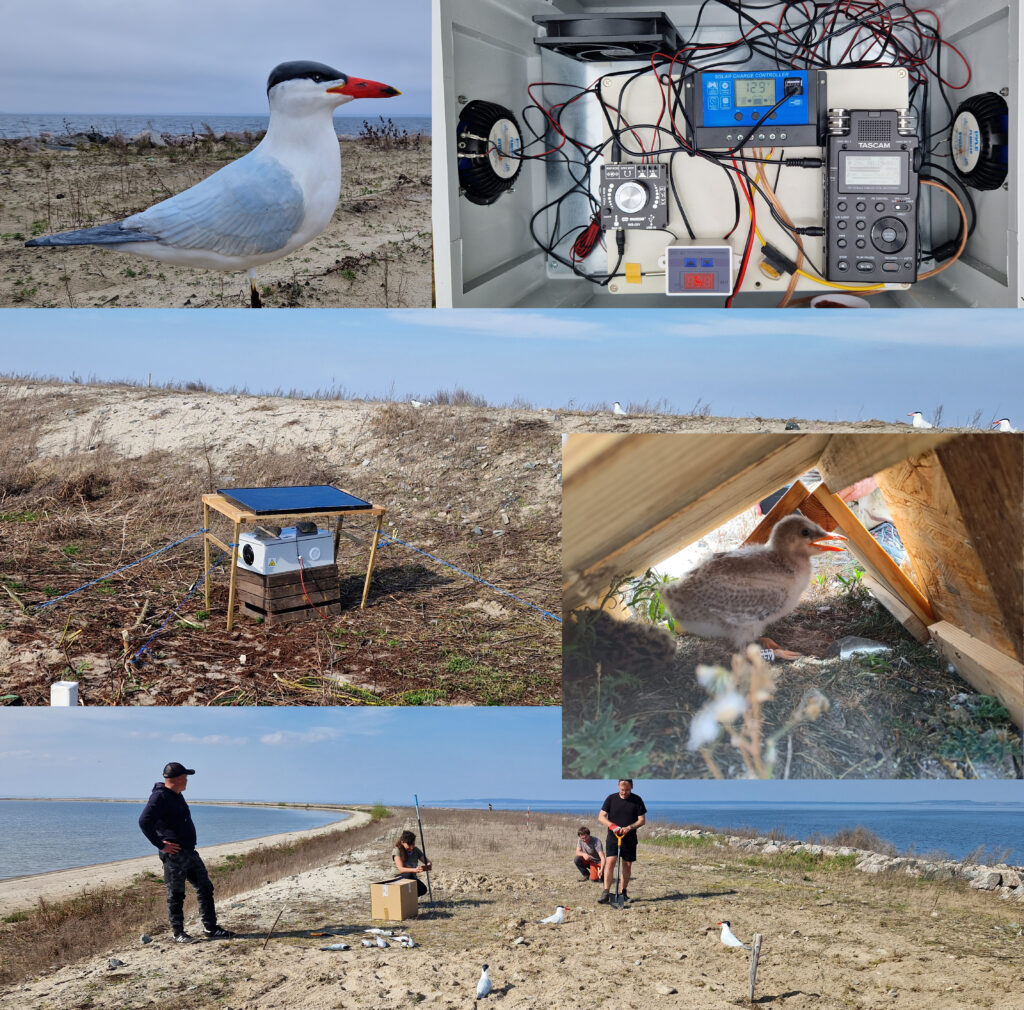
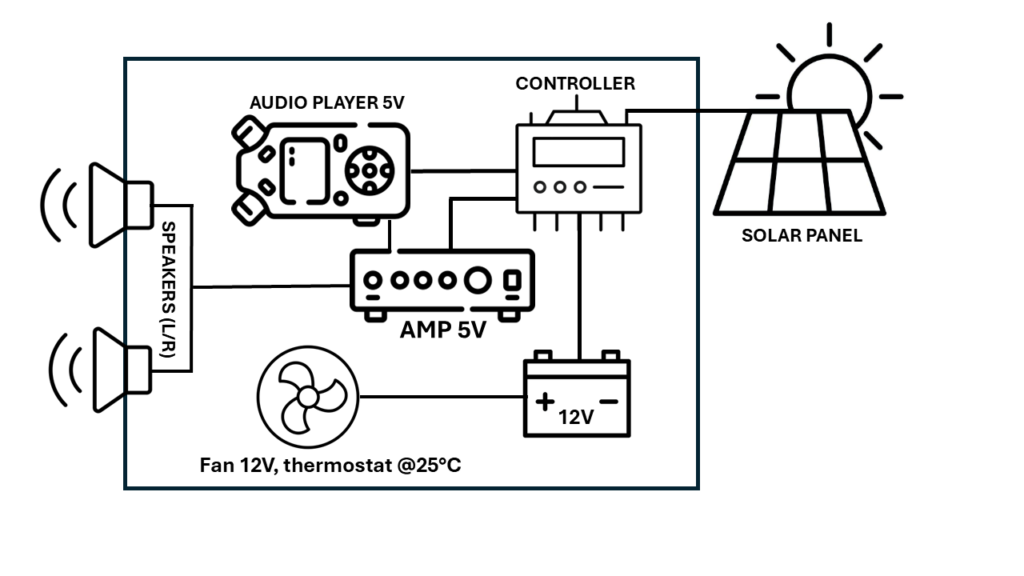
W 2025 roku na sztucznej wyspie na Zalewie Szczecińskim przetestowano system przywabiania rybitw wielkodziobych (Hydroprogne caspia), łączący odtwarzanie głosów kolonii z naturalnej wielkości modelami ptaków wykonanymi w technologii druku 3D. Zasilany energią słoneczną zestaw zaprojektowano do długotrwałej, bezobsługowej pracy, a aktywność ptaków monitorowano fotopułapkami i podczas kontroli terenowych. Po jego instalacji w przygotowanym miejscu zagnieździła się jedna para, która wyprowadziła młode — był to pierwszy udokumentowany udany lęg tego gatunku w Polsce. Rozwiązanie stanowi tani i możliwy do powielania system wspierający tworzenie kolonii rzadkich lub zanikających ptaków wodnych na sztucznych wyspach i odtwarzanych siedliskach przybrzeżnych.

Big Bird: A global dataset of birds in drone imagery annotated to species level


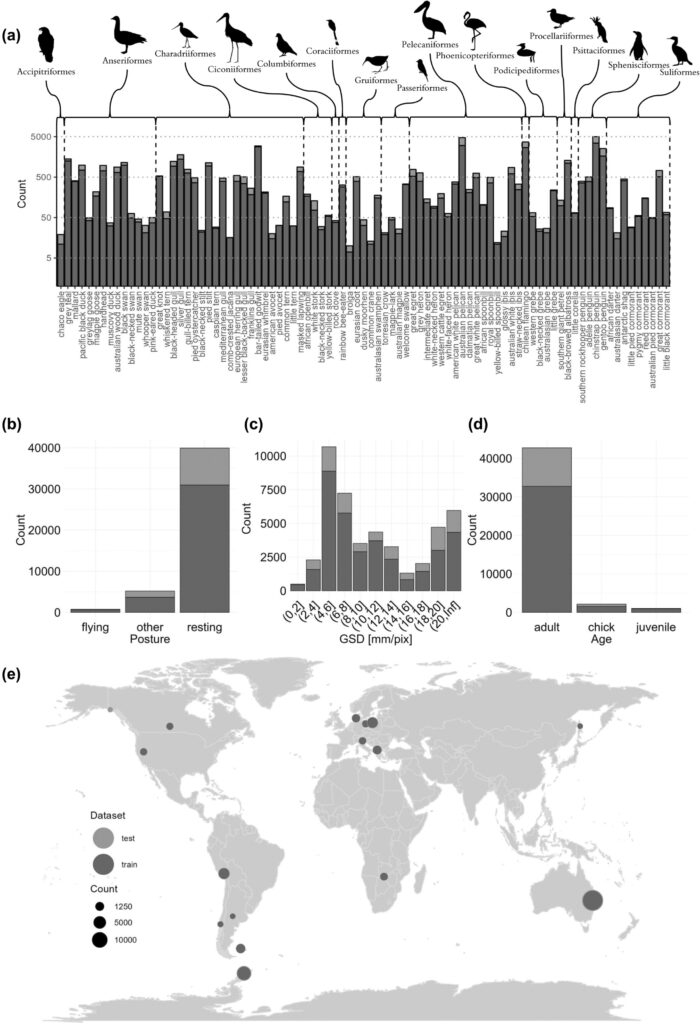
Wilson, J.P., Amano, T., Bregnballe, T., Corregidor-Castro, A., Francis, R., Gallego-García, D., Hodgson, J.C., Jones, L.R., Luque-Fernández, C.R., Marchowski, D., McEvoy, J., McKellar, A.E., Oosthuizen, W.C., Pfeifer, C., Renner, M., Sarasola, J.H., Sokač, M., Valle, R., Zbyryt, A. and Fuller, R.A. (2026), Big Bird: A global dataset of birds in drone imagery annotated to species level. Remote Sens Ecol Conserv, 12: 629-644.

https://doi.org/10.1002/rse2.70059

2025

Artificial islands supporting migratory bird populations as potential sources of microinvertebrate dispersal

Sługocki Ł, Mordacz U, Jankowiak Ł, Michałowski S, Czerniawski R, Marchowski D (2025) Artificial islands supporting migratory bird populations as potential sources of microinvertebrate dispersal. Ecohydrol Hydrobiol 25:100660.

https://doi.org/10.1016/j.ecohyd.2025.100660

Badania zbiorników wodnych na sztucznych wyspach Brysna i Śmięcka w estuarium Odry wykazały wyraźne różnice w składzie zooplanktonu względem otaczających wód zalewu oraz jego większą liczebność na Brysnej. Stwierdzono obecność gatunków obcych lub ekspansywnych, a także Daphnia magna, rzadko spotykanej w środowiskach estuariowych. Wyspy mogą sprzyjać osiedlaniu się drobnych bezkręgowców i ich dalszemu rozprzestrzenianiu za pośrednictwem ptaków migrujących, potencjalnie przenoszących jaja przetrwalnikowe lub cysty. Wyniki wskazują na potrzebę monitorowania tych siedlisk i dalszych badań nad ich rolą w rozprzestrzenianiu gatunków, w tym potencjalnie inwazyjnych.

.

.


Marchowski D., Haas F., Chodkiewicz T., Meissner W. 2025.

Assessing the spatial overlap between planned offshore wind farms and wintering waterbirds: a Baltic Sea case study.Bird Conservation International 35: e15

DOI: 10.1017/S0959270925000097


Marchowski D., Jurszo R., Stańczak P., Jasiński M., Guentel S. 2025.

Non-selective waterbird hunting in a Natura 2000 site results in killing of protected species: A case study from western Poland. Avian Research 16(3): 100276.

DOI: 10.1016/j.avrs.2025.100276

Podkast na YouTube po polsku podsumowuje artykuł oraz polemikę z myśliwymi.

Fig. 5. Total number of birds hunted in the 2021/2022 to 2023/2024 seasons, based on the analysis of hunting photographs. Divided into legally protected species (P), Vulnerable species (VU), Near Threatened species (NT), and other game species (Other).


Po lewej: link do podkastu Spotify opis artykułu oraz polemiki ze środwiskami myśliwskimi [po polsku].

A long-term monitoring dataset of non-breeding waterbirds at Lake Miedwie, Poland (2002–2025)


Marchowski D., Stańczak P., Jasiński M., Guentzel S. 2025. A long-term monitoring dataset of non-breeding waterbirds at Lake Miedwie, Poland (2002–2025). Biodiversity Data Journal 13: e160615.

DOI: 10.3897/BDJ.13.e160615

Grassroots action removes five bird species from Poland’s game list

Marchowski D., Chara P. 2025. Grassroots action removes five bird species from Poland’s game list. Oryx Published online 2025:1-2. doi:10.1017/S0030605325102214

2024

New habitats for birds: Rapid population growth and the emergence of new breeding species

Marchowski D., Kajzer Z., Michałowski S., Stańczak P., Jankowiak Ł. 2024. New habitats for birds: Rapid population growth and the emergence of new breeding species. Oryx 58(6):1 DOI: 10.1017/S0030605324001169

Effects of highly pathogenic avian influenza among colonial waterbirds in the lower Odra valley

Marchowski D., Chara P., Borek Ł., Kajzer Z., Bzoma S. 2024. Effects of highly pathogenic avian influenza among colonial waterbirds in the lower Odra valley. Acta Ornithol. 59: 23–33.

DOI: https://doi.org/10.3161/00016454AO2024.59.1.003

First year-round movement tracking of the Mediterranean Gull (Ichthyaetus melanocephalus) in Europe: insights and conservation recommendations for declining population

Jankowiak, Ł., Sidelnik, M., Siekiera, J., Szymczak, J., Zieliński, P., & Marchowski, D. (2024). First year-round movement tracking of the Mediterranean Gull (Ichthyaetus melanocephalus) in Europe: Insights and conservation recommendations for declining population. Journal of Ornithology.

https://doi.org/10.1007/s10336-024-02208-6


Seabird bycatch in European waters

Ramírez, I., Mitchell, D., Vulcano, A., Rouxel, Y., Marchowski, D., Almeida, A., Arcos, J. M., Cortes, V., Lange, G., Morkūnas, J., Oliveira, N., & Paiva, V. H. (2024). Seabird bycatch in European waters. Animal Conservation.

https://doi.org/10.1111/acv.12948

Quantifying a mass mortality event in freshwater wildlife within the Lower Odra River: Insights from a large European river

Szlauer-Łukaszewska, A., Ławicki, Ł., Engel, J., Drewniak, E., Ciężak, K., & Marchowski, D. (2024). Quantifying a mass mortality event in freshwater wildlife within the Lower Odra River: Insights from a large European river. Science of The Total Environment, 907, 167898.

DOI: https://doi.org/10.1016/j.scitotenv.2023.167898.

Methods of quantifying a mass mortality event in freshwater wildlife within the river ecosystem

Marchowski, D., Szlauer-Łukaszewska, A., Ławicki, Ł., Engel, J., Drewniak, E., Ciężak, K. (2024). MethodsX 12(8):102567

DOI: https://doi.org/10.1016/j.mex.2024.102567

2023

A dataset on quantifying a mass mortality event in freshwater wildlife within the Lower Odra River


Marchowski, D., Szlauer-Łukaszewska, A., Ławicki, Ł., Engel, J., Drewniak, E., & Ciężak, K. (2023). A dataset on quantifying a mass mortality event in freshwater wildlife within the Lower Odra River. Data in Brief, 51, 109753.

DOI: 10.1016/j.dib.2023.109753

Advances in Scale Assessment of Seabird Bycatch: A New Methodological Framework

Marchowski, Dominik. 2023. „Advances in Scale Assessment of Seabird Bycatch: A New Methodological Framework” Diversity 15, no. 7: 808.

https://doi.org/10.3390/d15070808

a20210205_114044

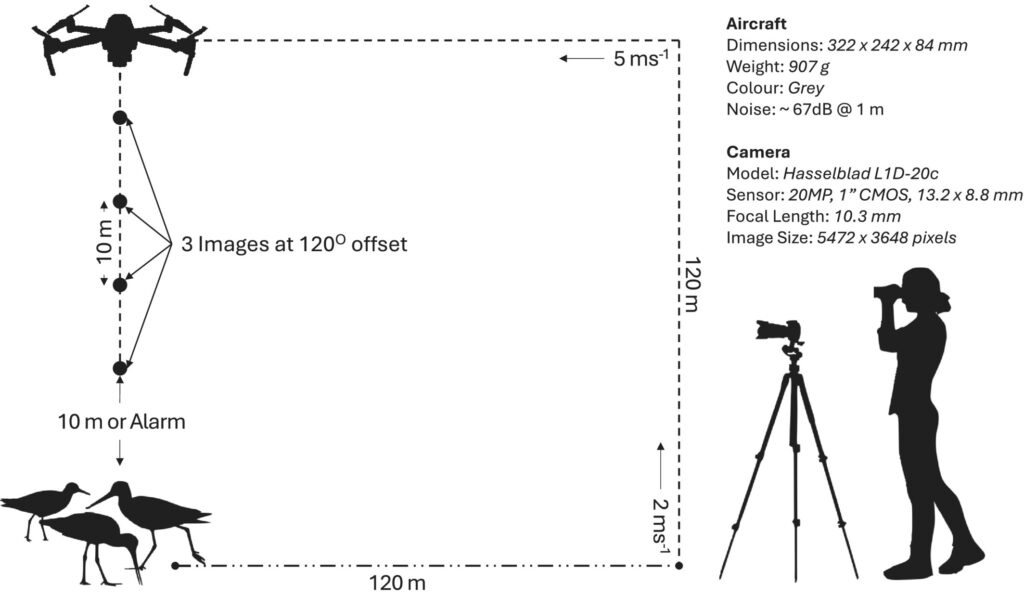
The use of drones to study the breeding productivity of Whooper Swan Cygnus cygnus

Sikora, A., & Marchowski, D. (2023). The use of drones to study the breeding productivity of Whooper Swan Cygnus cygnus. The European Zoological Journal, 90(1), 193–200.

https://doi.org/10.1080/24750263.2023.2181414

Unprecedented mass mortality of aquatic organisms in the River Oder

Marchowski D., Ławicki Ł. 2023. January 2023, Oryx 57(1):9

DOI: 10.1017/S0030605322001387

2022

A General Deep Learning Model for Bird Detection in High-Resolution Airborne Imagery.

Weinstein B.G., Garner L., Saccomanno V.R.., Steinkraus A., Ortega A., Brush K., Yenni G., McKellar A.E., Converse R., Lippitt C.D., Wegmann A., Holmes N.D., Edney A.J., Hart T., Jessopp M.J., Clarke R.H., Marchowski D. et al. 2022. A General Deep Learning Model for Bird Detection in High-Resolution Airborne Imagery. Ecological Applications 32(8): e2694.

DOI: 10.1002/eap.2694

Warmer winters increase the breeding success of the Goosander: the case of the Pomeranian Lake District in Poland

Marchowski D., Mohr A., Ławicki Ł. Jankowiak Ł. 2022. Ardea 110(1)

DOI: 10.5253/arde.v110i1.a3

Marchowski, D., Flis, A., Gwiazda, R., Kavetska, K. M., & Wysocki, D. (2022). The dominant species of piscivorous bird does not adversely affect fishery in the lagoons of the southern Baltic Sea. The European Zoological Journal, 89(1), 304–316.

https://doi.org/10.1080/24750263.2022.2040620

Marchowski, Dominik, Łukasz Ławicki, and Jacek Kaliciuk. 2022. „Management of Marine Natura 2000 Sites as Exemplified by Seabirds Wintering in the Baltic Sea: The Case of Poland” Diversity 14, no. 12: 1081.

https://doi.org/10.3390/d14121081